
The relationship between higher education and regional economy has always been a hot topic in academic circles. This paper explored the influencing factors of the uncoordinated coupling between higher education and regional economy in Yunnan Province from 2010-2021. The main conclusions of this paper are as follows: Firstly, based on spatial durbin model, it studied the influence of the per capita disposable income of urban residents on the uncoordinated coupling between higher education and regional economy. The results show that per capita disposable income has a positive effect on the coordinated development between higher education and regional economy, but it has negative effect on the coordinated development between higher education and regional economy in neighboring cities. Secondly, A spatial heterogeneity analysis was based on the background of “Double First-rate”. The results show that after “Double First-rate”, the per capita disposable income of urban residents reduces the uncoordinated coupling between local higher education and regional economy, but improves the uncoordinated development between higher education and regional economy in the neighboring areas. Finally, expenditure on education and science both play a completely mediating role in the relationship between the per capita disposable income and uncoordinated coupling.
| Published in | International Journal of Economic Behavior and Organization (Volume 12, Issue 3) |
| DOI | 10.11648/j.ijebo.20241203.16 |
| Page(s) | 174-182 |
| Creative Commons |
This is an Open Access article, distributed under the terms of the Creative Commons Attribution 4.0 International License (http://creativecommons.org/licenses/by/4.0/), which permits unrestricted use, distribution and reproduction in any medium or format, provided the original work is properly cited. |
| Copyright |
Copyright © The Author(s), 2024. Published by Science Publishing Group |
Higher Education, Regional Economy, Uncoordinated Coupling
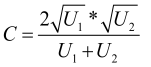
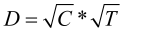
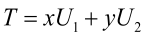
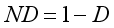

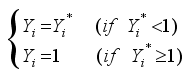
 presents the influence of per capita disposable income on the dependent variable, if it becomes less significant after adding mediator variable, it means that expenditure on education and science plays a complete mediating role in the relationship between the uncoordinated coupling of higher education and regional economy.
 Year | City | ||||||
|---|---|---|---|---|---|---|---|
Kunming | Qujing | Yuxi | Baoshan | Zhaotong | Lijiang | Pu’er | |
2010 | 0.2689 | 0.5749 | 0.5625 | 0.5390 | 0.5425 | 0.5599 | 0.5604 |
2011 | 0.2476 | 0.5764 | 0.6191 | 0.6145 | 0.5383 | 0.5992 | 0.5618 |
2012 | 0.2285 | 0.5866 | 0.4841 | 0.4708 | 0.5226 | 0.5087 | 0.5472 |
2013 | 0.1952 | 0.5223 | 0.5842 | 0.4962 | 0.5491 | 0.6032 | 0.5560 |
2014 | 0.1942 | 0.5442 | 0.5923 | 0.5495 | 0.6132 | 0.6454 | 0.5698 |
2015 | 0.1796 | 0.5246 | 0.5163 | 0.5381 | 0.5888 | 0.6542 | 0.5543 |
2016 | 0.1559 | 0.5206 | 0.5083 | 0.5306 | 0.5977 | 0.6663 | 0.5927 |
2017 | 0.1465 | 0.5261 | 0.5051 | 0.5528 | 0.5998 | 0.5280 | 0.6411 |
2018 | 0.1517 | 0.4999 | 0.5171 | 0.5648 | 0.6102 | 0.5059 | 0.7150 |
2019 | 0.1288 | 0.5223 | 0.5287 | 0.6108 | 0.5894 | 0.4926 | 0.6824 |
2020 | 0.1357 | 0.5212 | 0.5354 | 0.6279 | 0.5654 | 0.5217 | 0.6250 |
2021 | 0.1275 | 0.5437 | 0.5606 | 0.6500 | 0.5101 | 0.5436 | 0.6061 |
Year | City | ||||||
|---|---|---|---|---|---|---|---|
Lincang | Dali | Wenshan | Honghe | Banna | Chuxiong | Dehong | |
2010 | 0.5886 | 0.5282 | 0.5523 | 0.5754 | 0.5613 | 0.5745 | 0.4993 |
2011 | 0.5594 | 0.5013 | 0.5195 | 0.5672 | 0.5443 | 0.5499 | 0.4610 |
2012 | 0.5343 | 0.5063 | 0.5291 | 0.5201 | 0.5146 | 0.5455 | 0.4572 |
2013 | 0.5439 | 0.5007 | 0.5444 | 0.5161 | 0.4965 | 0.5529 | 0.7832 |
2014 | 0.5404 | 0.5049 | 0.5482 | 0.5126 | 0.4900 | 0.5452 | 0.5290 |
2015 | 0.5036 | 0.4921 | 0.5461 | 0.4846 | 0.5020 | 0.5504 | 0.5296 |
2016 | 0.5612 | 0.4875 | 0.6471 | 0.4768 | 0.5105 | 0.5447 | 0.5234 |
2017 | 0.6012 | 0.5021 | 0.5081 | 0.4687 | 0.5099 | 0.5521 | 0.4229 |
2018 | 0.6387 | 0.5202 | 0.5070 | 0.4646 | 0.4779 | 0.5318 | 0.4324 |
2019 | 0.6521 | 0.4340 | 0.5367 | 0.4556 | 0.5400 | 0.6046 | 0.4782 |
2020 | 0.6643 | 0.4963 | 0.5504 | 0.4993 | 0.6336 | 0.6120 | 0.5159 |
2021 | 0.6057 | 0.5038 | 0.5296 | 0.5382 | 0.7658 | 0.5949 | 0.5938 |
Variable | Effect | |||||
|---|---|---|---|---|---|---|
Direct effect | Indirect effect | Total effect | ||||
coefficient | Z score | coefficient | Z score | coefficient | Z score | |
the number of practicing doctors | -0.0415* | -1.83 | -0.1220*** | -2.67 | -0.1636*** | -3.20 |
foreign direct investment | -0.0002 | -0.06 | 0.0001 | 0.02 | -0.0001 | -0.02 |
urbanization rate | -0.0723 | -1.52 | 0.0515 | 0.56 | -0.0209 | -0.20 |
per capita disposable income | -0.0308** | -2.00 | 0.0428** | 2.15 | 0.0120 | -0.29 |
2010-2016 | 2017-2021 | |||||
|---|---|---|---|---|---|---|
Direct effect | Indirect effect | Total effect | Direct effect | Indirect effect | Total effect | |
the number of practicing doctors | -0.0081 | 0.0025 | -0.0056 | -0.0548* | -0.1066** | -0.1614*** |
foreign direct investment | 0.0018 | 0.0022 | 0.0040 | -0.0069 | -0.0023 | -0.0092 |
urbanization rate | -0.0365 | 0.1775 | 0.1410 | -0.0653 | 0-0.1522 | -0.2176* |
per capita disposable income | -0.0025 | 0.0307 | 0.0284 | -0.0315* | 0.0468* | 0.0153 |
Variable | Effect | |||||
|---|---|---|---|---|---|---|
Direct effect | Indirect effect | Total effect | ||||
coefficient | Z score | coefficient | Z score | coefficient | Z score | |
the number of practicing doctors | -0.0614** | -2.20 | -0.1064* | -1.67 | -0.1677* | -1.83 |
foreign direct investment | -0.0036 | -0.18 | -0.0279 | -0.97 | -0.0305 | -0.15 |
urbanization rate | 0.0453 | 1.20 | 0.2198* | 1.68 | 0.2651 | -0.29 |
per capita disposable income (A lag phase) | -0.0501** | -2.22 | 0.0337* | 1.65 | -0.0164 | -0.16 |
Variable | Effect | |||||
|---|---|---|---|---|---|---|
Direct effect | Indirect effect | Total effect | ||||
coefficient | Z score | coefficient | coefficient | Z score | coefficient | |
the number of practicing doctors | -0.0489* | -2.29 | -0.1287*** | -2.78 | -0.1776*** | -3.41 |
foreign direct investment | -0.0031 | 0.65 | -0.0006 | -0.09 | -0.0025 | 0.31 |
urbanization rate | -0.0409 | -0.84 | 0.1110 | 0.0957 | -0.0209 | -0.20 |
per capita disposable income | -0.0689 | -1.47 | -0.0626 | -0.77 | -0.1315 | -1.43 |
expenditure on education | -0.0944** | -2.49 | -0.0651 | -0.94 | -0.0707 | 0.63 |
Variable | Effect | |||||
|---|---|---|---|---|---|---|
Direct effect | Indirect effect | Total effect | ||||
coefficient | Z score | coefficient | coefficient | Z score | coefficient | |
the number of practicing doctors | -0.0415* | -1.83 | -0.1220*** | -2.67 | -0.1636*** | -3.20 |
foreign direct investment | -0.0002 | -0.06 | 0.0001 | 0.02 | -0.0001 | -0.02 |
urbanization rate | -0.0723 | -1.52 | 0.0515 | 0.56 | -0.0209 | -0.20 |
per capita disposable income | -0.0133 | 0.44 | -0.1242 | 0.99 | -0.1.375 | 1.35 |
expenditure on science | -0.0323*** | -3.03 | 0.0107 | 0.82 | -0.0216 | 0.97 |
DFr | Double First-rate (The construction of "Double First-class" aims to cultivate world-class universities and disciplines, and enhance the strength of China's higher education and international competitiveness. By increasing investment, strengthening scientific research innovation, optimizing management and evaluation, the overall level of higher education in China has been significantly improved, and a number of universities have become world-class universities, providing talent and intellectual support for economic and social development.) |
| [1] | Zhang Wenli. Study on the influence of local higher education on the structure thansformation and coordinated development of regional economic [J]. Journal of Jilin Agricultural Science and Technology University, 2024, 33(01): 13-18. |
| [2] | Sun Gangcheng, Yang Hua. The coupling of urban clusters and higher education clusters and their impact on economic development —— Based on the empirical analysis of the statistical data of the three major urban clusters from 2012 to 2021 [J]. Journal of Tianjin Academy of Education and Science, 2024, 36(01): 33-46. |
| [3] | Song Meizhe, Li Mengsu. Analysis of the coupling and coordination relationship between higher education, scientific and technological innovation and economic development [J]. Modern Education Management, 2019, (03): 19-25. |
| [4] | Zhou Lifeng, Lin Yang. Study on the coupling and coordination between higher education and regional economic development in Hubei Province [J]. Yangtze River Technical Economy, 2023, 7(02): 117-123. |
| [5] | CAI Wenbo, Chen Niannian. Coupling and coordinating effect of higher education, scientific and technological innovation and economic growth in urban agglomeration of Yangtze River Economic Belt [J]. Modern Education Management, 2022, (11): 33-42. |
| [6] | Guo Shuya, He Yunfeng, Xu Yunfang. The pling coupling of higher education and economy in six central provinces under the integration of education science and technology talents [J]. Research on Education and Accounting, 2023, 34(03): 3-13. |
| [7] | Zhang Maocong, Xue Xiangyu. Study on the Mechanism of Higher Education Scale, Urbanization and Regional Economic Growth —— Evidence based on provincial panel data [J]. Journal of Yantai University (Philosophy and Social Sciences Edition), 2024, 37(01): 19-28 + 93. |
| [8] | Wang Yiran, Xu Wenqi, Zhang Lihua. The interaction mechanism and coupling strategy of higher education, scientific and technological innovation ability and regional economy [J]. Journal of the National School of Education Administration, 2023, (03): 51-59. |
| [9] | Zhu Yingchun, Wang Dapeng. Empirical study on the impact of economic development on the scale of higher education [J]. Statistics and Decision Making, 2010, (10): 78-80. |
| [10] | Miao Wenli, Bu Jing. Empirical study on the influencing factors of college enrollment scale in China —— Based on the coordinated development of higher education and economy and society [J]. Journal of China University of Mining and Technology (Social Science edition), 2013,15(02): 59-66. |
| [11] | Bai Xue, Zhang Xiang, Cui Naipeng. Study on the external influence mechanism of open education enrollment scale [J]. Chinese journal of distance education, 2022, (10): 40-47+75. |
| [12] | Zhang Da. Study of the difference in the coordination between habitat environment and economic development in the central cities of the Yangtze River Economic Belt and Its influencing factors [J]. 2020, 42(06): 79-88. |
| [13] | Gao Nan, Zhang Xincheng, Wang Linyan, et al. An Empirical Study on the Coupled and Coordinating Relations between Rural Tourism and Rural Economy in China [J]. Journal of Shaanxi Normal University (Natural Science Edition), 2018,46(06): 10-19. |
| [14] | Gu Haoxin, Qin Weishan, Zhao Mingming, Sun Haiyan, Wang Fuxi. Spatial and temporal evolution and influencing factors of coordinated development of tourism economy and ecological environment in the Yellow River Basin [J]. Arid Land Geography, 2022, 45(02): 628-638. |
| [15] | Li Qiong. The spatial and temporal characteristics and driving force analysis of the coupling between social security and economic development in China [J]. Geographical Research, 2020, 39(06): 1401-1417. |
| [16] | Liu Hui, Ma Junfeng. Competitive Government: An explanation for the expansion of China’s Higher Education [J]. Journal Of East China Normal University, 2022, 40(10): 42-53. |
| [17] | Chen Wen Bo. A comparative study of the structure of Higher Education funds input and expenditrue: Based on OECD country data analysis [J]. China Economics of education review, 2021, 6(05): 42-65. |
| [18] | Zhang Tonggong, Zhang Long, Zhao Dezhi. Public education expenditure, human capital accumulation and Economic Growth: The perspective of regional differences [J]. Macroeconomic Research, 2020, (03): 132-144+175. |
| [19] | Qi Chang Hou, Yue Xi Ming. Structure of fiscal expenditrue and economic development: A new interpretation of Wagner’s Law. Economic Theory and Business Management, 2020, (07): 43-57. |
| [20] | Zhang Jun, Zhang Yan. Measurement and analysis of the coupling and coordination between ecological agriculture and ecological tourism based on the gray system theory —— Take Hunan Province as an example [J]. Eco-economy, 2020, 36(02): 122-126 + 144. |
APA Style
Li, X. F., Liao, S., Gao, K. (2024). Characteristics and Influencing Factors of the Uncoordinated Coupling Between Higher Education and Regional Economy in Yunnan Province. International Journal of Economic Behavior and Organization, 12(3), 174-182. https://doi.org/10.11648/j.ijebo.20241203.16
ACS Style
Li, X. F.; Liao, S.; Gao, K. Characteristics and Influencing Factors of the Uncoordinated Coupling Between Higher Education and Regional Economy in Yunnan Province. Int. J. Econ. Behav. Organ. 2024, 12(3), 174-182. doi: 10.11648/j.ijebo.20241203.16
AMA Style
Li XF, Liao S, Gao K. Characteristics and Influencing Factors of the Uncoordinated Coupling Between Higher Education and Regional Economy in Yunnan Province. Int J Econ Behav Organ. 2024;12(3):174-182. doi: 10.11648/j.ijebo.20241203.16
@article{10.11648/j.ijebo.20241203.16,
  author = {Xue feng Li and Sheng Liao and Ke Gao},
  title = {Characteristics and Influencing Factors of the Uncoordinated Coupling Between Higher Education and Regional Economy in Yunnan Province
},
  journal = {International Journal of Economic Behavior and Organization},
  volume = {12},
  number = {3},
  pages = {174-182},
  doi = {10.11648/j.ijebo.20241203.16},
  url = {https://doi.org/10.11648/j.ijebo.20241203.16},
  eprint = {https://article.sciencepublishinggroup.com/pdf/10.11648.j.ijebo.20241203.16},
  abstract = {The relationship between higher education and regional economy has always been a hot topic in academic circles. This paper explored the influencing factors of the uncoordinated coupling between higher education and regional economy in Yunnan Province from 2010-2021. The main conclusions of this paper are as follows: Firstly, based on spatial durbin model, it studied the influence of the per capita disposable income of urban residents on the uncoordinated coupling between higher education and regional economy. The results show that per capita disposable income has a positive effect on the coordinated development between higher education and regional economy, but it has negative effect on the coordinated development between higher education and regional economy in neighboring cities. Secondly, A spatial heterogeneity analysis was based on the background of “Double First-rate”. The results show that after “Double First-rate”, the per capita disposable income of urban residents reduces the uncoordinated coupling between local higher education and regional economy, but improves the uncoordinated development between higher education and regional economy in the neighboring areas. Finally, expenditure on education and science both play a completely mediating role in the relationship between the per capita disposable income and uncoordinated coupling.
},
 year = {2024}
}
TY  - JOUR
T1  - Characteristics and Influencing Factors of the Uncoordinated Coupling Between Higher Education and Regional Economy in Yunnan Province

AU  - Xue feng Li
AU  - Sheng Liao
AU  - Ke Gao
Y1  - 2024/09/23
PY  - 2024
N1  - https://doi.org/10.11648/j.ijebo.20241203.16
DO  - 10.11648/j.ijebo.20241203.16
T2  - International Journal of Economic Behavior and Organization
JF  - International Journal of Economic Behavior and Organization
JO  - International Journal of Economic Behavior and Organization
SP  - 174
EP  - 182
PB  - Science Publishing Group
SN  - 2328-7616
UR  - https://doi.org/10.11648/j.ijebo.20241203.16
AB  - The relationship between higher education and regional economy has always been a hot topic in academic circles. This paper explored the influencing factors of the uncoordinated coupling between higher education and regional economy in Yunnan Province from 2010-2021. The main conclusions of this paper are as follows: Firstly, based on spatial durbin model, it studied the influence of the per capita disposable income of urban residents on the uncoordinated coupling between higher education and regional economy. The results show that per capita disposable income has a positive effect on the coordinated development between higher education and regional economy, but it has negative effect on the coordinated development between higher education and regional economy in neighboring cities. Secondly, A spatial heterogeneity analysis was based on the background of “Double First-rate”. The results show that after “Double First-rate”, the per capita disposable income of urban residents reduces the uncoordinated coupling between local higher education and regional economy, but improves the uncoordinated development between higher education and regional economy in the neighboring areas. Finally, expenditure on education and science both play a completely mediating role in the relationship between the per capita disposable income and uncoordinated coupling.

VL  - 12
IS  - 3
ER  -
Faculty of Education, Yunnan Normal University, Kunming, China
China Media Group, Beijing, China
School of Economics and Management, Shandong Youth University of Political Science, Jinan, China ; Shandong Agricultural Development Credit Guarantee Co., Ltd, Jinan, China




 Share This Article
 Twitter
 Linked In
 Facebook
 Copy
Copy Download